How the New 48-Team World Cup Format Works — Explained Simply
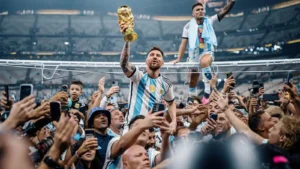
So you switched on the TV, grabbed your snacks, and suddenly someone at the bar said, “Wait — there are 48 teams now?” and you just nodded along like you totally knew what that meant. No shame. The World Cup 2026 format explained situation has left millions of fans scratching their heads. It’s not just bigger. The entire tournament structure has changed — new groups, a new knockout round that’s never existed before, and yes, a whole lot more football. Let’s break it all down, no football degree required.
What Is the World Cup 2026 Format? (The Short Answer)
The 2026 FIFA World Cup is the first-ever 48-team tournament in history, replacing the 32-team format that ran from 1998 through 2022. Think of it like your favourite restaurant doubling its menu overnight — everything you loved is still there, but now there’s a whole new section you’ve never seen before.
The 48 teams are divided into 12 groups of four teams each. Every team plays three guaranteed matches in the group stage. The top two from each group advance automatically — that’s 24 teams. Then the eight best third-place teams across all 12 groups also advance, bringing the total to 32 teams in the knockout stage. This is where it gets new and a little confusing: instead of jumping straight to the Round of 16, teams now enter a Round of 32 first — a brand-new stage that has never existed in World Cup history.
From there, it’s the classic knock-out you know: Round of 16, Quarter-finals, Semi-finals, and the Final. To lift the trophy, a team needs to win seven matches — one more than before.
What FIFA Says About the New Format
According to FIFA, the 2026 tournament will be the largest World Cup ever staged. The competition will feature 48 teams, 104 matches, and be hosted across three countries — the United States, Canada, and Mexico. FIFA believes the expanded format will create more opportunities for nations from Africa, Asia, CONCACAF, and Oceania to compete on football’s biggest stage while maintaining the excitement of knockout football.
The governing body has also stated that the new structure is designed to increase global participation without reducing the competitive quality of the tournament. Whether fans love or hate the expansion, one thing is certain: World Cup 2026 will be the biggest football event the sport has ever seen.
Why Did FIFA Expand to 48 Teams?
FIFA expanded to 48 teams to give more nations a genuine shot at the World Cup, particularly from Africa, Asia, and the Caribbean. For years, the qualification spots were heavily skewed toward Europe and South America, while smaller football nations with improving squads kept missing out. The expanded format changes that.
Of course, there’s a business angle too. The tournament now features 104 matches — up from 64 in Qatar 2022. That’s 40 more games for broadcasters, sponsors, and advertisers. FIFA reportedly expects revenues close to $9 billion this cycle. Critics argue the expansion is purely money-driven; FIFA maintains it’s good for global football. Probably a bit of both, honestly.
The co-hosts — the United States, Canada, and Mexico — qualify automatically. The remaining 45 spots were distributed through FIFA’s six continental confederations. For context: Europe gets 16 spots, Africa gets 9, Asia gets 8.5, and so on down the line.
World Cup 2026 vs World Cup 2022: What’s Different?
| Feature | World Cup 2022 (Qatar) | World Cup 2026 (USA, Canada & Mexico) |
| Total Teams | 32 | 48 |
| Number of Groups | 8 groups of 4 | 12 groups of 4 |
| Total Matches | 64 | 104 |
| First Knockout Round | Round of 16 | Round of 32 (New) |
| Teams Advancing Per Group | Top 2 only | Top 2 + 8 best third-placed teams |
| Matches Needed to Win the Trophy | 6 | 7 |
| Host Nations | 1 (Qatar) | 3 (USA, Canada, Mexico) |
| Tournament Duration | 29 days | 39 days |
| Total Players | 832 | 1,248 |
| Biggest Change | Traditional format | Largest World Cup in history |
How Does the Group Stage Work?
In the group stage, each team plays three matches — one against every other team in their group. Here’s how the 12 groups feed into the knockout stage:
- Groups A through L — 12 groups, 4 teams in each
- Top 2 from every group automatically advance → that’s 24 teams
- Best 8 third-placed teams (ranked across all 12 groups by points, then goal difference) also advance → 8 more teams
- Total advancing: 32 teams enter the Round of 32
- Tiebreaker rules (in order): goal difference → goals scored → head-to-head result → fair play (yellow/red cards) → drawing of lots
- Guaranteed matches: every team plays at least 3 group-stage games, win or lose
Even finishing third with just one win could be enough to survive — which is a massive change for smaller nations who’d previously been eliminated with a single defeat.
World Cup 2026 Format at a Glance
|
How Does the New Round of 32 Work?
The Round of 32 is a brand-new, single-elimination knockout stage introduced for the first time in 2026. Here’s the journey from there to the final:
- Round of 32 — 32 teams play 16 single-leg knockout matches. Lose, and you’re done.
- Round of 16 — 16 winners advance and face off again.
- Quarter-finals — 8 teams remain. The pressure is massive by this point.
- Semi-finals — 4 teams left. Everything’s on the line.
- Final — One winner. One World Cup. One moment of pure madness.
No second chances from the Round of 32 onwards. It’s win or go home — classic football drama, just stretched across one extra round.
Version Control with Football — Why the Format Change Even Matters
When I first started following the World Cup, the 32-team format felt almost sacred. Eight groups, a Round of 16, quarter-finals — it was clean, compact, and brutally fair. The new 48-team World Cup bracket disrupts that familiarity, and not everyone loves it. But here’s the thing: the old format excluded nations that have genuinely grown as football powers. The AFC Asian Cup is more competitive than it’s ever been. African sides regularly push European giants to extra time. CONCACAF has produced real shocks.
The World Cup 2026 format explained simply means this — more football, more nations, more genuine upsets. The math also works in favour of competitive balance: with the eight best third-place teams progressing, a group of death doesn’t automatically eliminate an unlucky but talented side. You could win your group game against the defending champions, drop points in another match, and still survive. That’s new drama. Understanding how many teams in World Cup 2026 are competing (48, if you lost count), knowing how FIFA World Cup 2026 groups feed into the bracket, and grasping the World Cup 2026 Round of 32 logic makes watching every group match far more interesting — because every goal, every card, every tiebreaker scenario suddenly matters to eight third-place slots simultaneously.
FAQ
How does the World Cup 2026 format work differently from previous tournaments?
The World Cup 2026 format adds 16 extra teams (48 total), expands to 12 groups, and introduces a brand-new Round of 32 knockout stage that has never existed before. Previously, only the top two from eight groups advanced — now, the top two from twelve groups plus the eight best third-place finishers all advance. This means 32 of the 48 teams survive the group stage, giving every nation a more realistic chance of reaching the knockouts.
How many teams are in the World Cup 2026 and how do they qualify?
There are 48 teams in the World Cup 2026 — expanded from 32 at all previous editions since 1998. Three teams (USA, Canada, Mexico) qualify automatically as co-hosts. The remaining 45 spots are distributed through FIFA’s six continental confederations based on their allocated quota. Europe receives the most slots (16), followed by Africa (9), Asia (8.5), and so on.
What is the 48-team World Cup bracket structure?
The 48-team World Cup bracket starts with 12 groups of four teams, feeds 32 teams into the new Round of 32, and then follows the traditional knockout format through the Round of 16, Quarter-finals, Semi-finals, and Final. Understanding how does World Cup 2026 work is essentially understanding one key idea: more teams means more rounds, but the drama of knockout football stays exactly the same from the Round of 32 onwards.
Final Thoughts
Look — change is always uncomfortable, especially when it’s something as beloved as the World Cup. But the World Cup 2026 format explained isn’t as overwhelming as it sounds once you see the logic: 12 groups, 32 teams surviving, one new round, and the same electric knockout drama you’ve always loved. The 48-team expansion isn’t perfect — some fixture pile-ups are real concerns — but the chance to see nations like Morocco, Japan, Senegal, or Australia go deeper than ever? That’s genuinely exciting football. So sit back, learn the bracket, pick your favourites — and maybe this time, actually understand why that third-place finish in Group G could matter so much.
The tournament has changed. Your love for it doesn’t have to.
Meta description: World Cup 2026 format explained — how 48 teams, 12 groups, the new Round of 32, and 104 matches all work in football’s biggest-ever tournament.